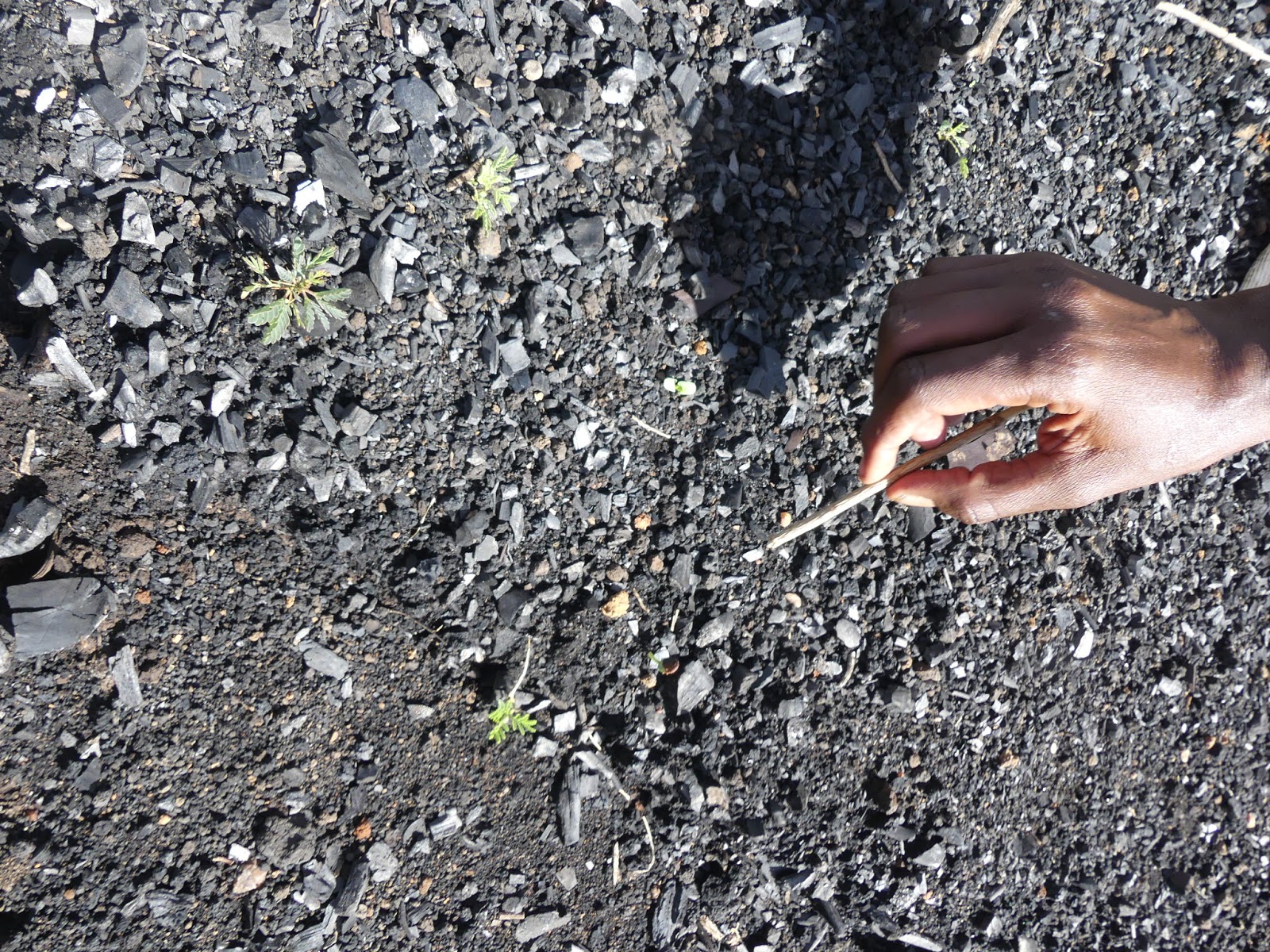
Application of plant seed using aircraft.
Aerial Seeding - Planning and Implementation for Post Burn Areas
Aerial seeding is often the largest cost associated with burned area emergency rehabilitation projects. The complexities involved in implementing safe and efficient aerial seeding operations demonstrate the need for a logical, planned approach for accomplishing needed work. If a project is not well-planned, opportunities exist for things to go wrong, the potential for accidents and injuries increases, and the probability of not accomplishing the work increases. In the haste of trying to get work done within short timeframes, one must ensure that critical tasks and/or responsibilities are not overlooked.
Aerial seeding requires contracting assistance. It requires the purchase of often large amounts of seed and the use of specialized equipment to implement emergency prescriptions to stabilize watersheds. We must be able to secure these goods and services on short notice; and we must be able to organize to effectively and safely implement these kinds of projects.
Regardless of size, aerial seeding projects can range from simple to very complex. Each can (and will present its own set of challenges. We must be able to assess and respond to these situations.
Factors to consider when prescribing seed include:
 | Type |
| Climatic influences |
| Elevation |
| Slope and aspect |
| Timing of applications |
| Soil characteristics |
| Need for structural aids (mulch, site preparation, etc.) |
| Management direction for the area |
| Runoff characteristics of the area |
PREPARING FOR AERIAL SEEDING PROJECTS (PRE-INCIDENT)
Burned Area Emergency Stabilization and Rehabilitation (ESR) projects are EMERGENCY situations. Anything that can be done to facilitate the process prior to the need arising will most certainly be helpful. Because of the many complexities involved in implementing aerial seeding prescriptions, a project manager should not go into an incident cold. He or she will be much better off some preplanning has been done.
There are many tasks that can be completed ahead of an incident that will facilitate efficient implementation of aerial seeding prescriptions. These include but are not limited to the following:
| Agency Administrator Commitment - Brief your appropriate agency administrator on the objectives of ESR. Make sure they understand its EMERGENCY nature and the URGENCY of getting the job done. Obtain their pre-incident commitment to accomplishing the work. Give ESR work PRIORITY over other work items. |
| Aerial Application Contracts - Assemble sample aerial application contracts from previous incidents. When embarking on a project and time is short, it is best to have some idea of how to proceed. Talk to someone who has had experience; or ff you have been involved before, use those methods that have proven effective. |
| Contracting and Procurement
| Work with your contracting and procurement sections to develop a list of potential aerial application contractors. Not all operators are the same and they may have differing amounts of support equipment available. It is beneficial to have this list in advance because of the short time available to solicit bids. Talk with someone who has had experience in aerial application in your area. |
| Develop a list of REPUTABLE seed suppliers. Seed suppliers are like any other businesses. Some are good and some are not so good. Try to find out who has provided the best level of service in your area. Find out if there have been problems with any of the suppliers in the recent past. |
|
| Seed Laws - Fully understand the laws governing the purchase and application of seed in your local area. This includes provisions for seed testing, labeling, and procedures for non-compliance. One of the worst things that can happen on a ESR project is to apply seed containing noxious weeds or other undesirable species. Every effort should be taken to ensure this does not happen. |
| Warehouse Space - Know the availability of large rental warehouse space in your local area. If a large scale seeding effort is planned, a place to store seed out of the weather is needed. This is particularly true when seed is delivered in bags. Also, provisions need to be made for loading and unloading seed at all times of the day or night. Fork lifts, or other loading machinery, need to be planned for. |
| Personnel
| Develop a list of personnel experienced in aerial application. In order for implementation to proceed smoothly, access to skilled individuals on short notice must be available. These individuals are often assigned to incidents for more than 14 days. |
| The kinds of skills required on an aerial seeding project include the following:
| Map Preparation - The importance of high quality maps on an aerial seeding project cannot be over emphasized. Maps provide the necessary link between survey team and implementation team. They are also necessary components of seed procurement and aerial application contracts. Seed is not always cheap and it must be known in advance how many acres are to be treated with a particular seed mix. It is also critical that seed be applied to the proper treatment areas. |
|
|
| Air Operations - All aerial seeding projects require the skills of an experienced air operations manager. This person or persons should be familiar with fixed-wing and/or helicopter operations. They should fully understand the capabilities of aircraft involved including payload, maneuverability, and navigation requirements. Proper air-to-ground and ground-to-ground communications are essential on aerial application projects. Air operations personnel need to familiar with communications equipment and procedures. Since this person will be overseeing aerial application operations, he or she must be familiar with FAA and internal agency aircraft safety rules and procedures. This person also needs to be familiar with other kinds of equipment used in aerial application of seed. This includes seed buckets or other types of seed delivery systems and their proper calibration, loading equipment such as preload chutes and bins, and seed storage and transportation. |
|
Communications/Dispatch - Proper communications are an essential component of a successful ESR incident. An experienced communications unit leader will be an important part of any ESR implementation organization.
|
|
Administration - his person should be familiar with agency accounting procedures for ESR, be able to keep accurate records, and understand procurement procedures and authorities.
|
PREPARING FOR AERIAL SEEDING PROJECTS (ON-INCIDENT)
Once assigned the responsibility of implementing an aerial seeding project, a number of factors must be considered when planning and organizing the operation, and in developing contracts. An excellent means of getting an early start is to get involved with the ESR survey team. This will provide you with an understanding of the prescriptions being considered and important characteristics of the land area to be treated. Some of the most important items that need to be considered include the following:
| Size of fire or complex of fires. |
| Geographic location and accessibility. |
| Terrain. |
| Elevation and climate. |
| Management areas/sensitive areas. |
| Landowners involved. |
| Number of seed mixes. |
| Timeframes. |